

| General | |
|---|---|
| Manufacturer: | Boeing |
| Production-Block: | , B-17F-10-BO: 41-24440 to 41-24489 |
| Operational History | |
|---|---|
| Bomb Group: | , 306th Bomb Group, 91st Bomb Group |
| Bomb Squadron: | , 324th Bomb Squadron, 367th Bomb Squadron |
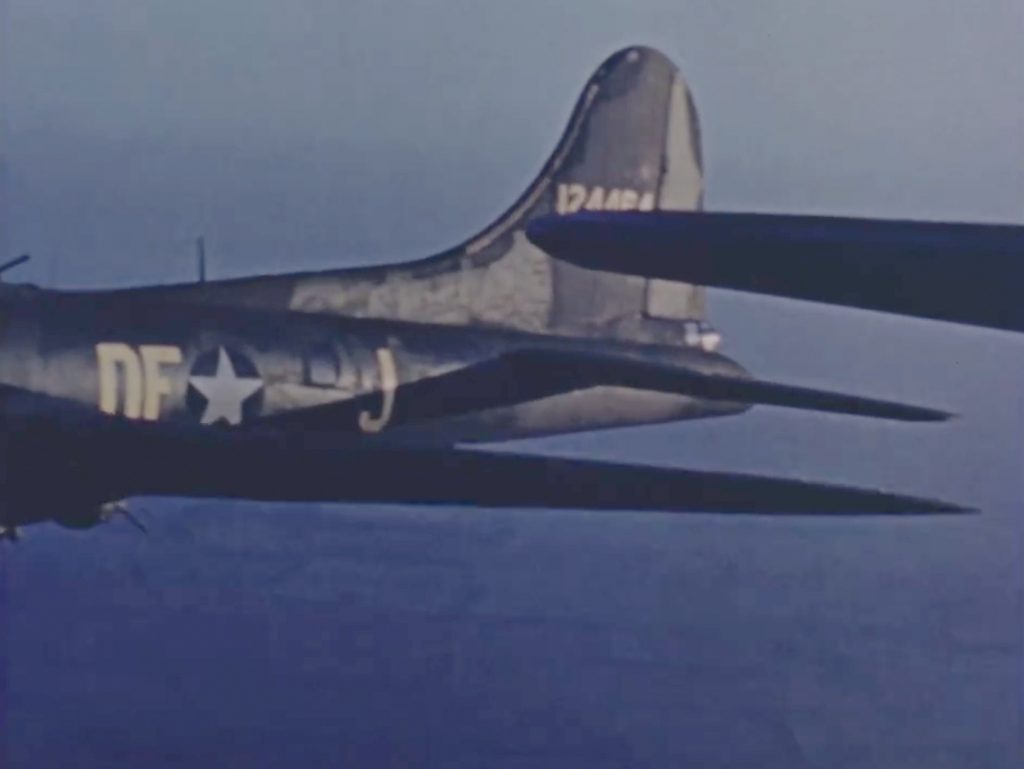
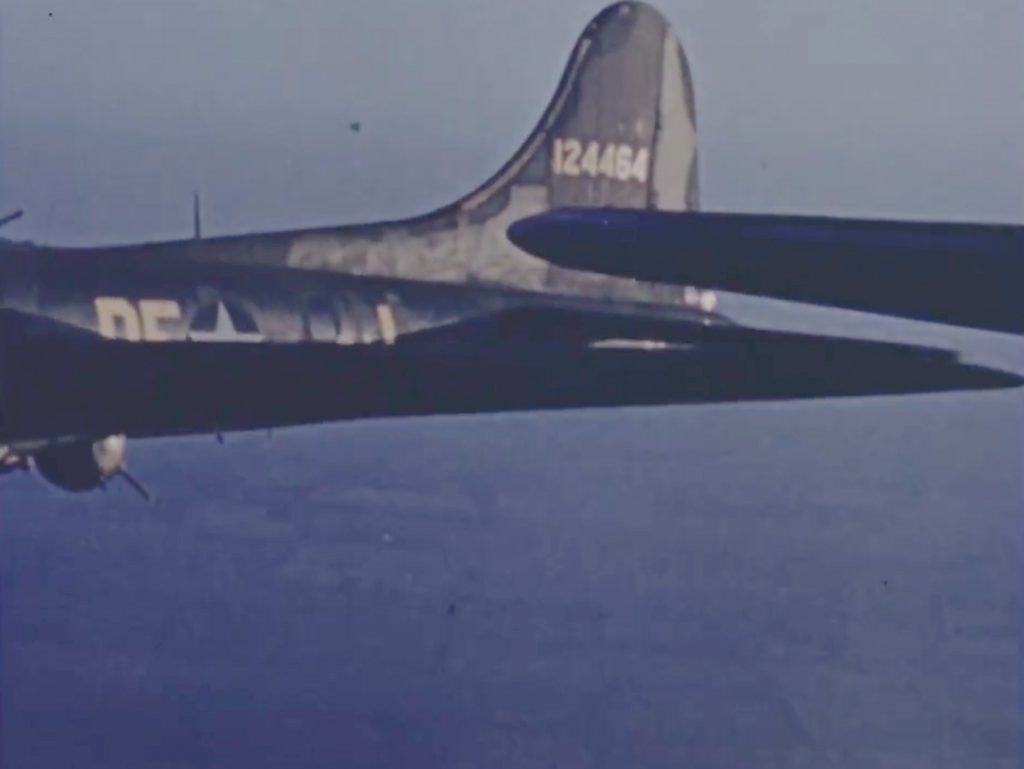
| RCL: | DF-J |
| MACR: | IDPF for Allen Brill |
| Fate: |
, Lost by enemy aircraft (04 March 1943) |
| Missions: | 9 |
History of
B-17 41-24464 / Excalibur
Assigned 367BS/306BG Westover 17-Aug-42; Thurleigh 13-Oct-42; transferred 324BS/91BG [DF-J] Bassingbourn 20-Feb-43; Missing in Action (MIA) 2m Hamm 4-Mar-43. Shot down by Lt Kostler (IV/NJG1) in Me 110, KO’d #1 & #3,oil pouring away before #4 was feathered ditched 40 miles west of Texel Is, Holland, in North Sea; five rescued by Royal Navy minesweeper and landed at Grimsby; EXCALIBUR. 3KIA 7RTD (Rescued by Royal Navy). No MACR issued.
Information may include corrections and additions based on Jing’s research.
B-17 41-24464 / Excalibur Details
From 91st Bomb Group History Record
Their aircraft was subject to some of the most vicious attacks made by the Germans upon any plane in the formation. By the time they had reached the German coast on the way out, three of their engines had been shot out and the remaining engine was not sufficient to keep the aircraft in formation.
Before long further attacks by German aircraft forced Lieutenant Brill to ditch in the icy waters of the North Sea. The sea was rough, and after bouncing off one wave the aircraft broke in two on the next swell. It is though that when the airplane broke in two amidships Staff Sergeant Morgan was rendered unconscious and thrown from the ship.
Efforst to locate and rescue him were unavailing. Lieutenants Brill and Lowry were the last ones to leave the airplane after it began to break up and refused to save themselves until after the other combat crew members had safely entered their dinghies. The high winds soon carried the dinghies out of reach of these officers and although the other combat crew members attempted to save them they had sacrificed themselves to make sure that the surviving members of their crew would reach safety.
Those who were secure in the dinghies still had a difficult time and were not picked up by rescue craft until after they had spent approximately 16 hours in their rather perilous condition.
The seven members of Lieutenant Brill’s crew who were picked up by the Air/Sea Rescue Service suffered from shock and exposure and were not fit to return to duty for many days.
Mission Report for March 4th, 1943 Mission – Hamm, Germany
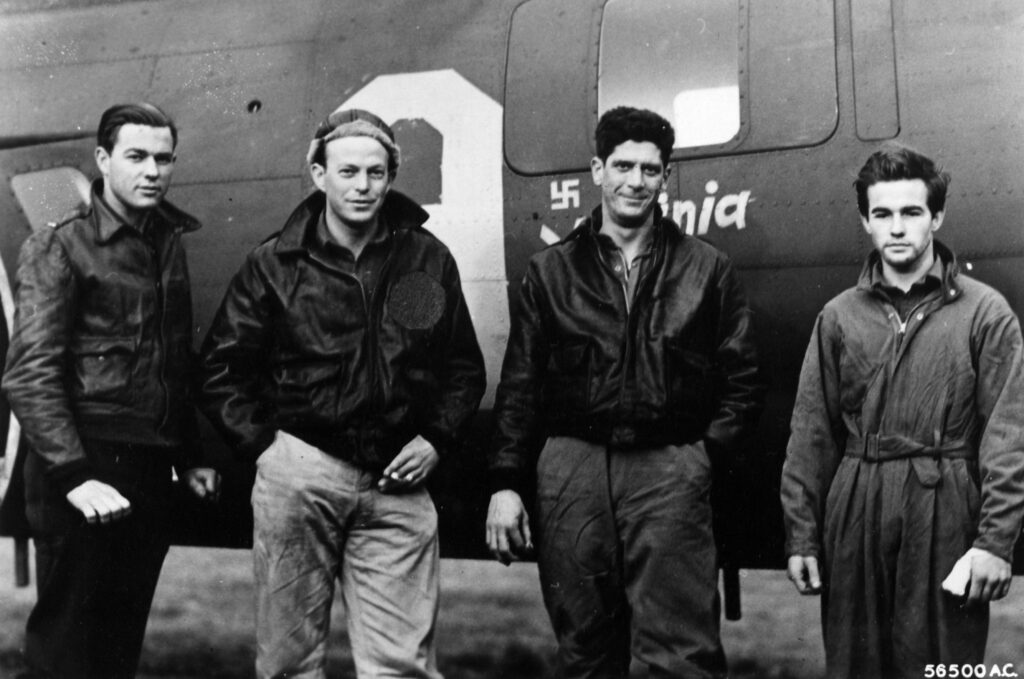
Aircraft #464, of the 324th Bomb Squadron, 91st Bomb Group was piloted by Lt. A. Brill, on the mission to Hamm on 4 March, 1943, and flew #3 of the 1st element in “C” flight. Enemy fighters were encountered first at 10:28 at about the time of reaching the Dutch Coast. From then until 11:45, about 5 minutes before the final failure of 3 engines forced a water landing, there was virtually a continuous running battle with fighters. Notwithstanding these attacks, the bomb run over the primary target was steady, straight, and level for 45 seconds and bombs of the Group were observed by several of the crew to have plastered the bridge area of the railroad yards and buildings nearby. Their own bombs they think bracketed the bridge itself.
Slight heavy flak which was very inaccurate was observed over the target area and also over Goor without any hits on ship #464. The enemy fighters out, estimated at 80, concentrated most of their attacks on our front, coming in, as many as four at a time, principally on a shallow dive from just above our level at 11 and 1 o’clock and going out over our plane. The planes nose guns were jammed all the way and evasion by diving and then pulling up was the maneuver resorted to for defense. About 10 minutes after going in over Texel, Germany [sic, note: Texel, Netherlands], radio gunner S/Sgt. D.C. Wells was wounded in the knee and from then on the problems multiplied. On one attack, just after the target, the #1 and #4 engines were hit. The #1 engine continued to run and finally set up a terrific vibration, which seemed as though it would shake off the whole wing before the engine finally cut-out. The #4 engine governor was probably shot up and that engine would run away and then by cutting it out it would run down for awhile before running away again, until it finally quit. Getting back out to Texel Germany [sic, note: Texel, Netherlands], the right waist gunner, T/Sgt. L.W. Wolfington received 8 or more minor wounds when fragments of a shell which came down through the ship. The yellow nose S/E fighters encountered out near the coast – about 25 of them – perhaps some of Goerings’ famous unit, were unusually ferocious and skilled in their attacks. Somewhere over Texel, attacks on another ship by ME110’s was with time fused bursts from cannon. The #3 engine was hit leaving the Dutch coast and began pouring oil. Ten minutes out to sea, with #2 alright, but only limited pull from #4 and #3, it was no longer possible to stay up in formation and we let down unprotected and under constant attack. Lt. R.P. Ball, Navigator, was hit in the left hand by shell fragments or glass splinters on the last enemy attack at 11:45. Finally the #4 engine, and then at 11:50 the #3 engine quit entirely, leaving only the #2 pulling – not enough to keep the plane airbourne.
In preparation for a forced landing both windows in the pilots and co-pilots section were opened and the rest of the crew assembled into the radio compartment with the navigator just aft of the radio waist partition. At 11:55 the aircraft touched the top of one wave and stopped solid on the next impact – judged by the crew to be an upwind landing directly into the seas. The shock was terrific and the forward partition of the radio room went out, the ship breaking in two, across the bombay section. The crew were all out in one second; the pilot and co-pilot into the water and the rest of the crew stepped onto the left wing through a ten foot gap. On top of the fuselage Sgt. Dickson tried desperately in a shock-weakened condition to pull the life rafts out of the hatch without success. In 3 to 5 seconds the nose sank, followed by the tail which just missed 3 swimming too near in the water, the suction drag being felt by Lt. Ball.
Nobody had thought to grab the radio and miraculously as the ship sank both life rafts and a box popped up through the hatch. Sgt. Dickson who had no life vest, grabbed the box which kept him afloat for 45 minutes, and later proved to be the missing and all important radio. There were shortly 7 of them, together clinging to and trying to inflate the two life rafts and the other three members of the crew were bobbing up and down, in and out of sight, in a boisterous short steep white capped sea with 40 foot troughs and about 80 feet between crests. They had all kept on their boots and all of their flying clothes, and with life vests were glad they had, for in ten minutes in the icy water they were desperately cold and exhausted. The life vests, perhaps excessive buoyancy on the chest, tended to throw you over on your back, but a little kicking kept your head up and on an even keel. It was a struggle to inflate the unwieldy rafts. The rip cord had pulled off and it was hard to get something to break the glass, the connection for inflating, but when finally connected the tank inflated the raft in a minute. The first raft was inflated and righted in 20 minutes and in 45 minutes both were inflated, lashed together with 3 in one, and four in the other. The struggle with the rafts, in the freezing water, in that terrific sea made it impossible to attempt to swim to give assistance to the 3 other members of the crew. They all appeared uninjured after the landing and apparently were being buoyed up by life vests; but the weakening strain of the flight and crash landing, and the buffeting of the icy waves, and the terrors of their predicament, doubtless all contributed in overcoming them. There was nothing to throw to them for added support and no ways to answer their yells for help. S/Sgt. J.E. Morgan was the first to disappear, about 5 minutes after the landing; Lt. A. Brill about 5 minutes later; and Lt. A.W. Lowry about 5 minutes after that. When the first raft was inflated only a concerted final effort of struggling and boosting by all hands could get the first man Lt. Brubaker into the raft. Then the others were pulled aboard together with 4 boxes of food which had become water soaked. There was no fresh water on the aircraft and none for the raft. Salt water is a poor appetizer and no one was hungry for quite a bit. The radio when recognized in its case, was soon set up and 45 minutes after the landing was sending out SOS’s – and was continuously cranked until help arrived at 6 P.M. The kite which was flown to hold up the aerial worked well in the 8 to 12 mile wind.
About 2 1/2 hours after the sea landing a plane came overhead and a flare was shot up but apparently not observed. A while later another plane went over but was not signalled to. About 17:30 they started paddling toward England figuring a northerly drift, although when picked up they were told a strong tide was setting them to the south. At 18:00 four planes flying low approached from the south – so low they were afraid they were going to be strafed. They were British Ansons. A flare was sent up and the planes circled and stood by overhead for about 2 hours, dropping a large rubber boat with a sea anchor, which we reached by paddling 10 minutes, and tinned food and water and many flares for our use. They marked us with smoke bombs and a smudge. After dark, at 19:45, we answered a searchlight coming across the water with our flares and by holding up on the end of an oar, a light which had been dropped to us by the R.A.F. Soon we were aboard a mine sweeper and got the best soup ever produced. About 5:45 A.M. the next morning they landed at Grimsby – about a 90 mile voyage. They estimate they sea landed at 53°10’N – 2°20’E. The good visibility made it possible to pick them up and save them at least a night in the sea raft.
Before going down the radio operator although wounded worked to get out signals of our distress. He was not available but others of the crew thought that all radio and communication systems had been shot out and prevented “SOS” going out.
The members of the crew available for interrogation – Lt. R.P. Ball, Lt. R.F. Brubaker, T/Sgt. W.G. Dickson, S/Sgt. J.M. Betchel and T/Sgt. E.L. Barber made one unanimous decisive comment – that they want more life boat drill. They also think that the paper containers for the food are inadequate to stand the wetting which may be expected. S/Sgt. D.C. Wells, and T/Sgt. L.M. Wolfington, who were wounded, did not return from Grimsby for interrogation.
“Hot News” reported by the crew at interrogation principally verified news previously reported by other crews the day before and has not been mentioned above. The willing and alert cooperation of the crew in offering themselves for immediate interrogation and the clarity of their observations of the many events of the whole mission and rescue of the day before, not to mention the manner in which they conducted themselves during these ordeals are a great tribute to them and their command.
Source: 91st Bomb Group – Mission Report for March 4th, 1943 Mission – Hamm, Germany
On a mission to Hamm, Germany, March 4, 1943, our group of sixteen (16) bombers was attacked by one-hundred twenty-five (125) fighters and we fought with them for one (1) hour before we lost two (2) engines and had to leave the formation at the Holland coast. When we left the formation, seven (7) fighters continued to attack us while we were losing altitude. Number three (3) engine was on fire. Gasoline and oil streamed out of the wing tank over the ball turret soaking Sgt. James Morgan, Jr. The pilot told him to come out of the turret because he could not see the use of the turret since it was covered with oil. All this time the pilot was expecting to ditch any minute. Sgt. Morgan continued operating the turret and firing for forty-five (45) minute, until the last enemy fighter left us. Then he came out of his turret. Five (5) minutes after he got out of the turret, the pilot ditched the plane and Sgt. Morgan drowned before the dinghy could be inflated.
Capt. Robert F. Brubaker
Bombardier, 324th Bomb Squadron, 91st Bomb Group
Midland, Texas – 29 November 1945
Source: Award of the Distinguished Flying Cross – Recommendation
—
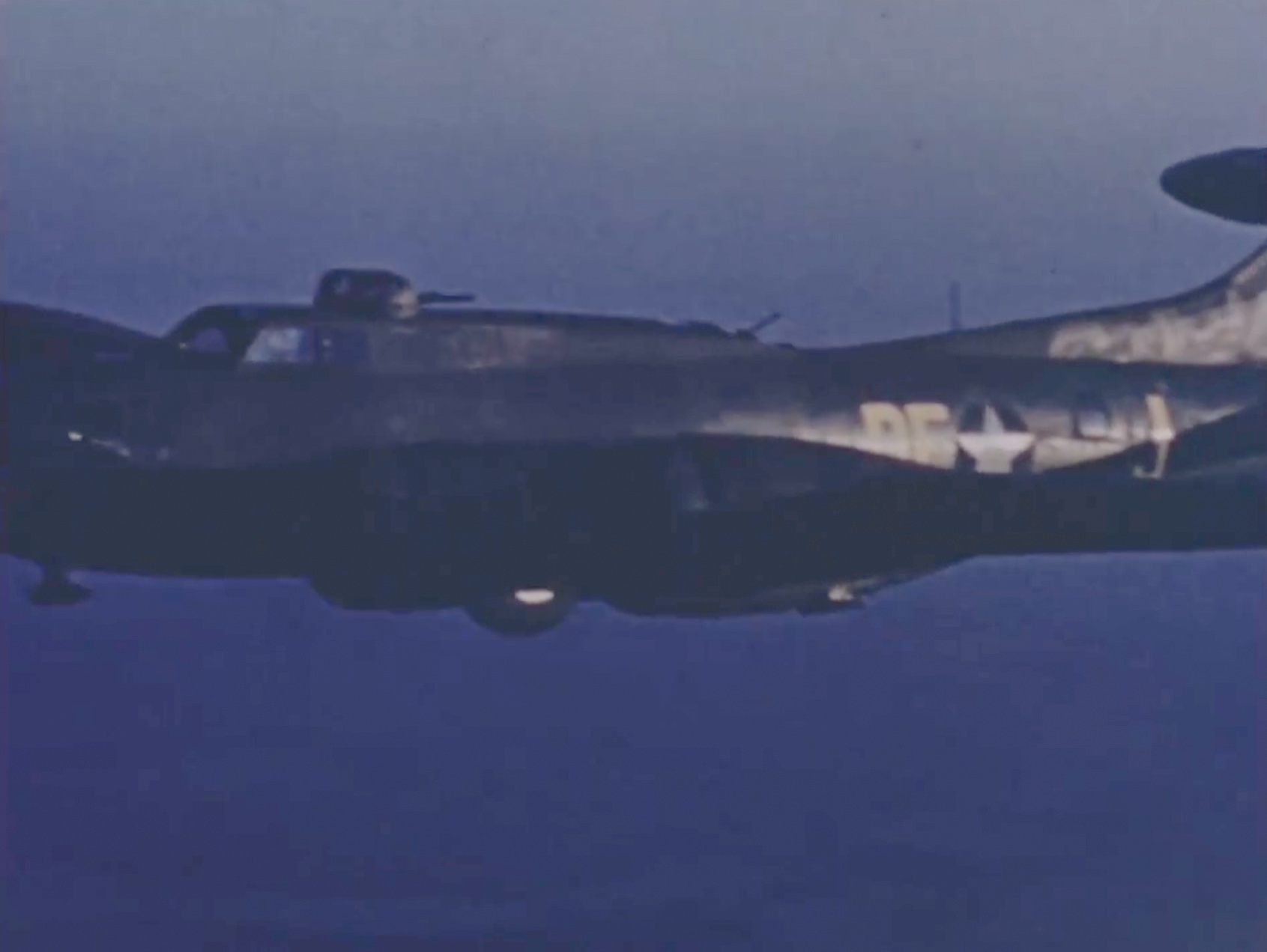
The pictures are from Memphis Belle RAW footage. Date of capture was probably 26 February 1943.
B-17 41-24464 / Excalibur Crew
| Position | Rank | Name (First Name, Middle Initial, Last Name) | Status | Note |
|---|---|---|---|---|
| P | 1LT | Allen Brill | KIA | - |
| CP | 1LT | Allen W. Lowry | KIA | - |
| NAV | 1LT | Rollin P. Ball | RTD | - |
| BOMB | 1LT | Robert F. Brubaker | RTD | - |
| ENG/TT | T/SGT | William G. Dickson | RTD | - |
| RO | S/SGT | D. C. Wells | RTD | - |
| BT | S/SGT | James E. Morgan, Jr. | KIA | - |
| WG | S/SGT | James M. Bechtel | RTD | - |
| WG | S/SGT | L. W. Wolfington | RTD | - |
| TG | T/SGT | Edwin L. Barber | RTD | - |
7,571 Aufrufe
This page was last updated on 29 March 2026


24. August 2024 access_time 11:24
Switch your Bomb Group and Bomb Squadrons around. 324th was a 91st BG and 367th was 306th. Photo is of 91st as you know