
| General | |
|---|---|
| Manufacturer: | Boeing |
| Production-Block: | , B-17G-105-BO: 43-39074 to 43-39273 |
| Operational History | |
|---|---|
| Bomb Group: | , 398th Bomb Group |
| Bomb Squadron: | , 600th Bomb Squadron |
| RCL: | N8-H |
| Fate: |
, Returned to the USA (07 July 1945) |
History of
B-17 43-39137
Delivered Lincoln 10/12/44; Dow Fd 18/12/44; Assigned 600BS/398BG [N8-H] Nuthampstead 29/1/45; landed in field Gt Chishill, Essex in night operation with Allan Ferguson 5/2/45; rep. by 2 SAD Abbotts Ripton & ret. Group 25/4/45; RAF Valley 2/6/45; Returned to the USA Bradley 7/6/45; 4168 Base Unit, South Plains, Texas 10/6/45; 613 BU Phillips, Aberdeen, Ma 6/3/46.
Information may include corrections and additions based on Jing’s research.
B-17 43-39137 Details
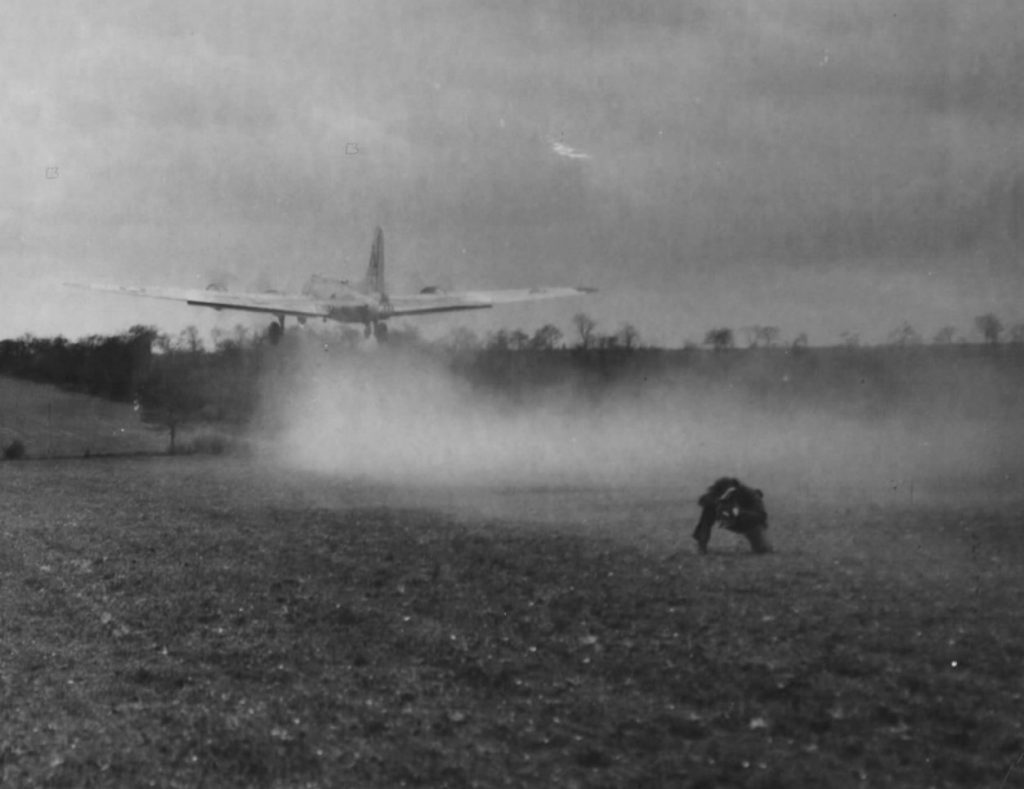
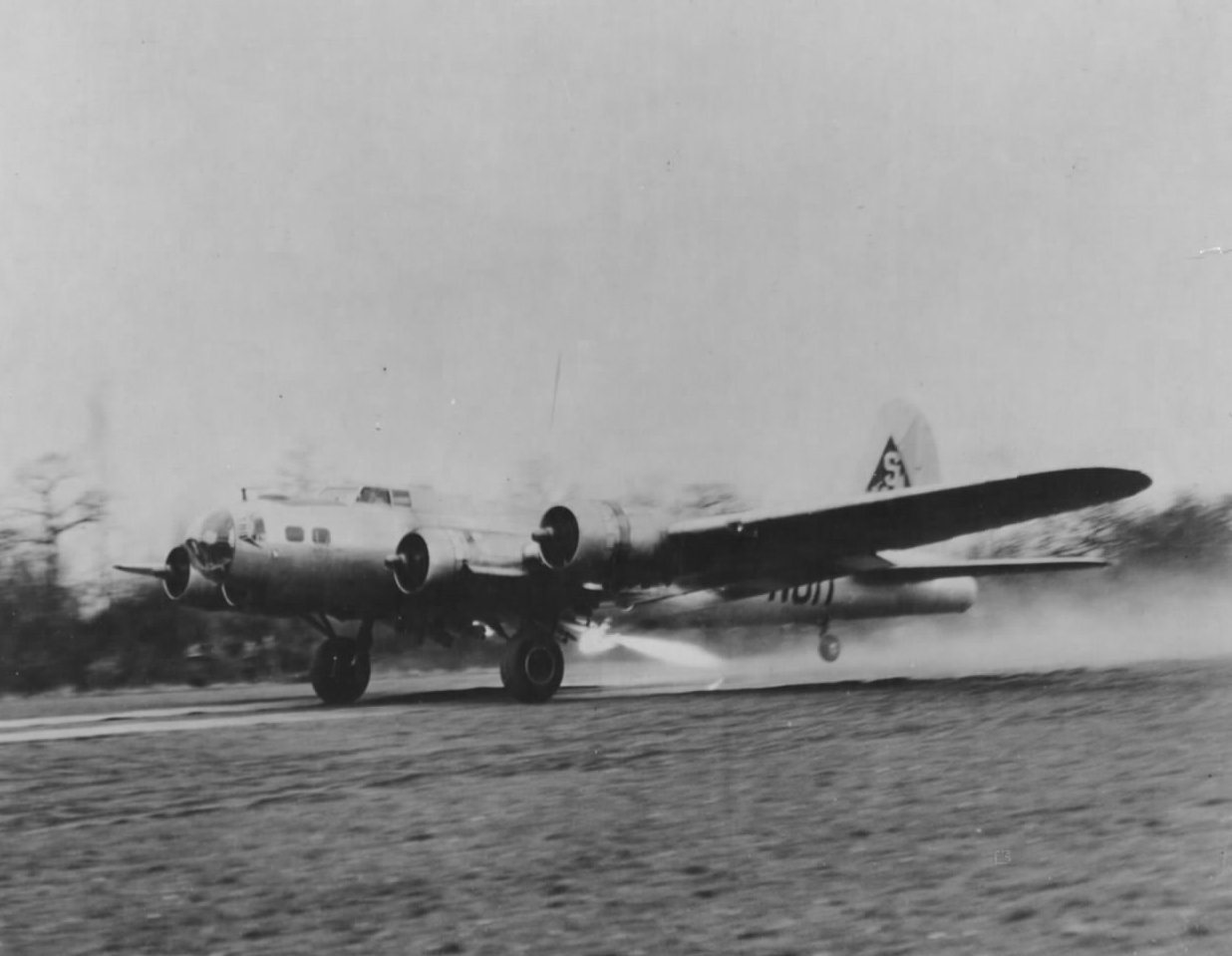
ROCKETS AID FORTRESS IN SHORT TAKE-OFF
Twelve rockets mounted beneath the wings of a B-17 Flying Fortress of the US 8th Air Force aid this crash landed plane to make a take-off short enough to clear obstacles at the end of a small ploughed English field. Fences and trees at one end of the field, located in a valley between two hills, offered extreme danger to the pilot, who successfully cleared them on the short take-off. The noval and successful experiment was conduced by Capt. Richard G. Holub, for bombers which crash-landed away from sizeable air strip.
After rolling only 3372 feet, half the distance it would take without the 12 rockets mounted beneath the wings. This Boeing B-17 had originally been forced, because of flak damage over enemy territory, to land on a small ploughed English field with fences and trees offering extreme danger to the pilot.
1,937 Aufrufe
This page was last updated on 06 February 2021


Write comment